Learn about angioplasty treatment, its causes, symptoms, procedure, benefits, recovery, and expert heart care at Jeevandan Health, Patna.
Angioplasty Treatment: Causes, Symptoms, Procedure, Benefits & Recovery Guide (2026)
Heart disease continues to be one of the leading health concerns worldwide, with blocked coronary arteries being a major cause of heart attacks. The good news is that modern cardiology offers highly effective treatments, and angioplasty treatment is one of the most trusted options available today. This minimally invasive procedure restores blood flow to the heart without the need for open-heart surgery, helping patients recover faster and return to their normal lives sooner.
Whether you've recently been diagnosed with coronary artery disease or want to learn more about angioplasty, this guide explains its causes, symptoms, procedure, benefits, recovery, and when to seek medical attention.
What is Angioplasty?
Angioplasty, also known as Percutaneous Coronary Intervention (PCI), is a minimally invasive procedure used to treat narrowed or blocked coronary arteries. These arteries supply oxygen-rich blood to the heart, and when they become blocked due to plaque buildup, the heart may not receive enough blood to function properly.
During the procedure, a cardiologist inserts a thin catheter with a tiny balloon at its tip through an artery in the wrist or groin. The balloon is carefully inflated at the site of the blockage to widen the artery. In most cases, a stent (a small mesh tube) is also placed to keep the artery open and reduce the chances of future blockage.
What Causes Blocked Heart Arteries?
Coronary artery disease usually develops gradually over many years. Fatty deposits known as plaque accumulate inside the arteries, restricting blood flow to the heart.
Common risk factors include:
- High cholesterol
- High blood pressure
- Diabetes
- Smoking or tobacco use
- Obesity
- Physical inactivity
- Family history of heart disease
- Chronic stress
- An unhealthy diet high in saturated and trans fats
Making healthy lifestyle changes and managing these risk factors can significantly reduce the chances of developing severe artery blockages.
Symptoms That May Indicate the Need for Angioplasty
Blocked arteries often develop silently, but as blood flow decreases, symptoms may begin to appear. Consult a heart specialist immediately if you experience:
- Chest pain or discomfort (Angina)
- Shortness of breath
- Pain spreading to the left arm, shoulder, neck, jaw, or back
- Excessive sweating
- Dizziness or light-headedness
- Unusual tiredness during routine activities
- Irregular heartbeat
- Symptoms of a heart attack
Early diagnosis and prompt treatment can help prevent serious complications and improve long-term heart health.
How is Angioplasty Performed?
Angioplasty is usually completed within 30 minutes to 2 hours, depending on the location and severity of the blockage.
The procedure generally includes the following steps:
- Local anesthesia is administered to numb the insertion site.
- A catheter is inserted through an artery in the wrist or groin.
- Contrast dye is injected to identify the blocked artery.
- A balloon catheter is guided to the narrowed section.
- The balloon is gently inflated to widen the artery.
- A stent is placed to help keep the artery open.
- The catheter is removed, and the patient is monitored during recovery.
Most patients remain awake throughout the procedure and experience minimal discomfort.
Benefits of Angioplasty
Angioplasty offers several important advantages, including:
- Restores healthy blood flow to the heart
- Relieves chest pain and discomfort
- Helps reduce the risk of heart attacks
- Minimally invasive with no large surgical incision
- Shorter hospital stay
- Faster recovery than traditional bypass surgery
- Improves overall quality of life
- Enables patients to return to daily activities sooner
Recovery After Angioplasty
Recovery is generally quick, although every patient's experience may differ based on their overall health and the complexity of the procedure.
To support a smooth recovery:
- Take all prescribed medications as directed.
- Avoid smoking and tobacco products.
- Eat a heart-healthy, balanced diet.
- Exercise only as recommended by your doctor.
- Keep your blood pressure, cholesterol, and diabetes under control.
- Attend all scheduled follow-up appointments.
Many patients are able to resume light daily activities within a week, although strenuous activities should only be restarted after medical advice.
Why Choose Jeevandan Health for Angioplasty?
I Jeevandan Health provides comprehensive cardiac care supported by experienced heart specialists in Patna and modern cardiac technology.
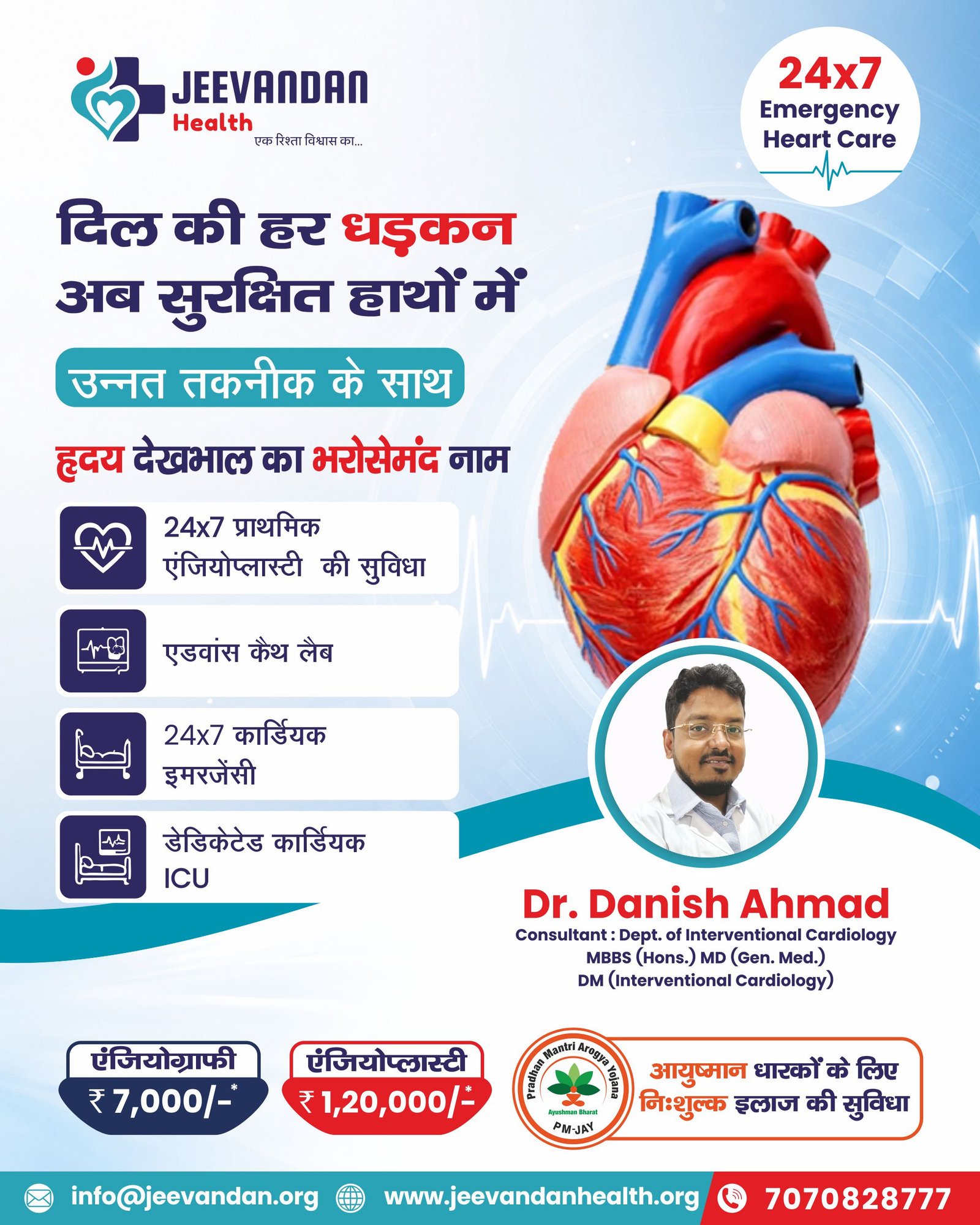
Under the expertise of Dr. Danish Ahmad, the hospital offers advanced cardiac services, including angiography, angioplasty, emergency heart care, and post-procedure rehabilitation. With a patient-first approach, advanced catheterization facilities, and personalized treatment plans, Jeevandan Health is committed to helping patients achieve better heart health.
Top 10 Frequently Asked Questions About Angioplasty
1. What is angioplasty and why is it performed?
Angioplasty is a minimally invasive procedure used to open blocked or narrowed coronary arteries, improving blood flow to the heart and reducing the risk of heart attack.
2. Is angioplasty considered major surgery?
No. Angioplasty is performed using a catheter through a small puncture in the wrist or groin and does not require opening the chest.
3. How long does angioplasty take?
The procedure usually takes between 30 minutes and 2 hours, depending on the complexity of the blockage.
4. How long is the recovery period after angioplasty?
Many patients can return to routine activities within 5–7 days, although recovery varies depending on individual health and medical advice.
5. Is angioplasty painful?
Most patients experience little to no pain during the procedure because local anesthesia is used. Mild pressure may be felt while the balloon is inflated.
6. Which foods should be avoided after angioplasty?
Limit fried foods, processed foods, sugary drinks, excess salt, trans fats, and foods high in saturated fat and cholesterol.
7. Can arteries become blocked again after angioplasty?
Yes. Without healthy lifestyle changes and prescribed medications, new blockages or narrowing can develop over time.
8. What is the success rate of angioplasty?
For appropriately selected patients, angioplasty has a very high success rate and is widely regarded as an effective treatment for blocked coronary arteries.
9. What is the difference between angiography and angioplasty?
Angiography is a diagnostic test used to detect blockages, while angioplasty is the treatment performed to open those blocked arteries.
10. When should I consult a heart specialist?
Seek immediate medical attention if you have persistent chest pain, shortness of breath, sudden sweating, dizziness, or any symptoms that could indicate a heart attack.
Final Thoughts
Angioplasty has transformed the way coronary artery disease is treated. As a safe, minimally invasive, and highly effective procedure, it helps restore blood flow, relieve symptoms, and lower the risk of serious cardiac complications.
Recognizing the warning signs early, seeking timely medical care, and following a heart-healthy lifestyle after treatment are equally important for maintaining long-term heart health. If you experience symptoms such as persistent chest pain or shortness of breath, don't delay consulting an experienced heart specialist.